Fred . . . Joy Refuses Bitterness
“A merry Christmas, uncle! God save you!”
(Fred, A Christmas Carol, Stave 1)
“Rejoice in the Lord always; again I will say, rejoice.”
(Philippians 4:4)
Advent Day 15 — Fred: Joy Refuses Bitterness
(Theme: Joy is a choice to love, even when rejected)
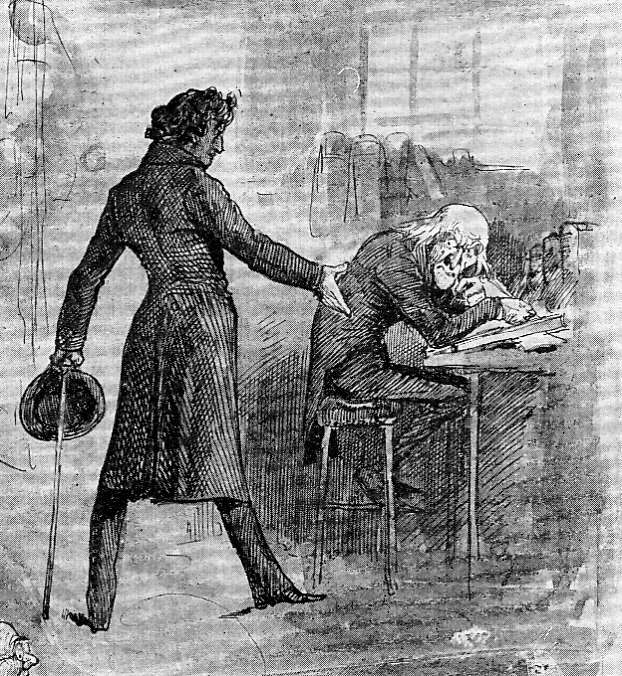
Fred, Scrooge’s cheerful nephew, stands as one of Dickens’ brightest lights of unshakable joy. Early in A Christmas Carol, Fred bursts into his uncle’s gloomy counting-house with a warm smile and heartfelt greeting:
“A merry Christmas, uncle! God save you!”
Scrooge’s reply, of course, is the infamous “Bah! Humbug!” Yet Fred’s joy doesn’t dim. Instead of retreating into offense, he responds with good humor and compassion:
“I am sorry, with all my heart, to find you so resolute. We have never had any quarrel, to which I have been a party. But I have made the trial in homage to Christmas, and I’ll keep my Christmas humour to the last. So A Merry Christmas, uncle!”
Fred’s joy is not circumstantial; it’s chosen. It’s rooted in something deeper than comfort or approval. Fred embodies the joy of one who has decided to love even when love is not returned.
Paul’s exhortation in Philippians 4:4—“Rejoice in the Lord always”—echoes this kind of joy. It’s not naïve happiness or surface cheer; it’s a deep confidence in God’s goodness. Fred models that joy when he refuses to let Scrooge’s bitterness infect him. Instead, his joy becomes a quiet witness, a lamp in the darkness.
When we choose joy, we declare that cynicism and bitterness will not rule us. We testify that love is stronger than rejection, and grace more powerful than grief.
This Advent, as you reflect on Fred’s steadfast warmth, ask yourself: where do I need to choose joy over resentment? Who in my life needs an invitation, even if they’ve turned me away before? Joy doesn’t deny pain—it redeems it.
Today, pause to listen to selections from the Advent Playlist—songs that capture the stubborn brightness of Christian joy, such as “Joy to the World” and “Good Christian Men, Rejoice.” Let them lift your heart heavenward. Then, spend a moment with today’s curated artwork—an image of Fred’s Christmas gathering, full of laughter, light, and open arms. May it remind you that joy multiplies when it is shared.

Prayer
Lord of Joy,
Teach me to rejoice in You always, not because life is easy, but because You are good. Keep my heart from bitterness and my spirit from despair. Help me, like Fred, to offer love where I’ve met indifference, and warmth where I’ve found coldness. Let my laughter be a witness, my kindness a song, and my joy a light that points others to You. In Jesus’ name, Amen.
Artwork: “It’s I, your uncle Scrooge. I have come to dinner. Will you let me in, Fred?”
Artist: Arthur Rackham
Medium: Hand-drawn with watercolor washing
Date: 1915
Published in: A Christmas Carol by Charles Dickens
Artistic Analysis
1. Artistic Style
Arthur Rackham’s unmistakable style is central to the image:
Loose yet expressive ink lines define the figures and objects with a slightly whimsical irregularity.
Soft, translucent watercolor washes create mood rather than strict realism.
Muted, earthy tones are characteristic of Rackham’s palette—warm browns, grays, and golds dominate, creating a gentle and nostalgic atmosphere.
Rackham’s work often blends the fantastical with the human, and here he softens Dickens’s world with a touch of fairytale warmth.
2. Narrative Moment
The illustration captures a pivotal emotional moment from A Christmas Carol:
Scrooge, newly transformed, arrives at his nephew Fred’s home for Christmas dinner.
The image conveys:
Scrooge’s hesitant humility—a man unused to warmth and welcome.
Fred and his young wife’s open, heartfelt invitation, signaling forgiveness, joy, and family connection.
This is the moment when Scrooge first steps into genuine human fellowship after years of isolation.
3. Composition
Rackham arranges the scene to emphasize Scrooge’s transition:
The Doorway
Scrooge stands framed in an open door, still partly in shadow.
Symbolically, he is at a threshold, moving from his cold, lonely world into a warm, loving family space.
The Gesture of Welcome
Fred’s arms are extended toward Scrooge, bridging the space between them.
His wife stands just behind, adding depth and human warmth.
Their posture literally draws Scrooge into the circle of light.
The Table
The bright white tablecloth and the piled fruit suggest abundance, festivity, and generosity.
The table anchors the right side of the image, representing the joy Scrooge is being invited into.
Rackham’s composition guides the viewer’s eye from the dark doorway → to Fred’s gesture → to the glowing celebration.
4. Color, Light, and Mood
Rackham uses light and color symbolically:
Warm golden light fills the dining room, highlighting abundant food and decorations.
Scrooge, in contrast, is painted in cooler, grayer hues, conveying the remnants of his old life.
The holly, ribbons, and soft red accents connect the moment to Christmas symbolism and renewal.
The overall mood is gentle, hopeful, and emotionally restorative.
5. Symbolic Elements
This scene is rich in Dickensian and Rackham-esque symbolism:
The Door: A moment of transformation; Scrooge crosses from his past into redemption.
Outstretched Hands: Forgiveness, acceptance, family, and unconditional welcome.
Holly Decorations: Tradition, festivity, and the promise of renewal.
Fruit and Tableware: Material signs of generosity, hospitality, and fellowship.
Rackham uses these elements to emphasize that Scrooge’s redemption is not only spiritual but relational.
O Come, O Come Immanuel
Latin Hymn, 12th century
Translated by John M. Neale (1818-1866)
O Come, O Come Immanuel
Latin Hymn, 12th century
Translated by John M. Neale (1818-1866)
Playlist Daily Highlight
We’ve provided multiple versions of this classic Christmas carol. Listen to your favorite style, but also try something new!
See if you find a new appreciation for this song or a different version than what you’re used to.
Take the time to listen . . . really listen to the words of this song and reflect on them. Let God speak to you in this moment.